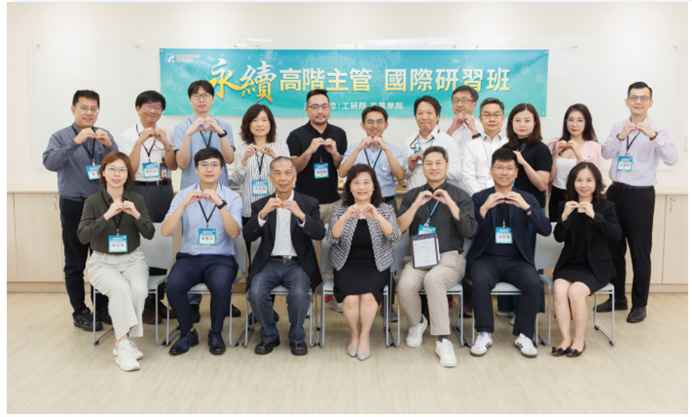
Through an industry chain co-learning model, in which large enterprises support smaller partners, ITRI promotes corporate sustainability transformation and technological upgrading, with the goal of helping clients achieve net-zero emissions and enhance market competitiveness. Leveraging ITRI’s technological capabilities and professional consulting experience, the program delivers customized training tailored to the needs of different industries, fostering collaborative learning and growth among upstream and downstream partners.
Sanyang Motor Group – Supplier Training Program on Energy Storage
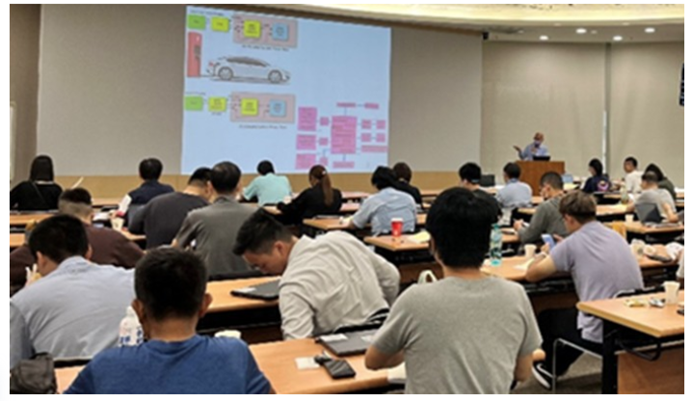
Since 2022, ITRI has supported more than 50 suppliers of Sanyang Motor in undertaking Net-Zero Sustainability Training. Leveraging ITRI’s technological expertise and consulting capabilities, the courses covered topics such as carbon management/carbon footprint verification, product carbon footprint, carbon credits, energy efficiency management/energy-saving measures, green energy, and energy storage. These efforts have helped Sanyang’s partners establish a comprehensive knowledge base on net-zero issues, fostering a shared understanding with Sanyang and facilitating the sustainable transformation of the industry chain.
Yulon Motor – Specialized Supply Chain Program on Electric Vehicles and Information Security
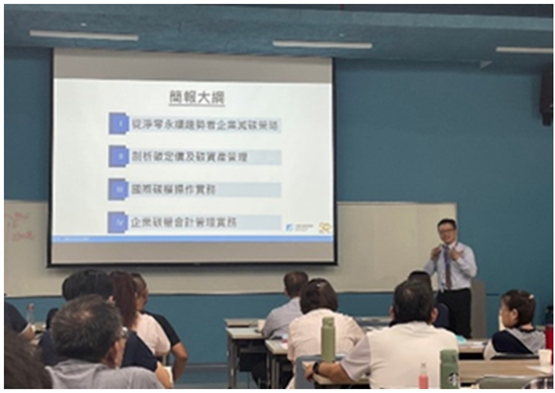
Customized training programs were designed for the electric vehicle industry, establishing a collaborative supply chain platform that engaged 75 companies and 310 employees. The initiative also encouraged participants to obtain iPAS certification, effectively linking upstream and downstream technologies, supporting the Group’s transition toward vehicle electrification, and driving industrial technology upgrading as well as enhanced market competitiveness.
Development of Net-Zero Carbon Planning Managers
With 2050 net-zero emissions established as a global common goal, the demand for green-collar talent has tripled over the past eight years. Talent cultivation has become a critical driver for achieving the net-zero transition. Through diversified strategies, ITRI advances related initiatives to lay a solid foundation for industries to move toward sustainable development. In 2024, a total of 7,159 participants received training.
- (1) Establishing a National Professional Certification for Sustainability Talent
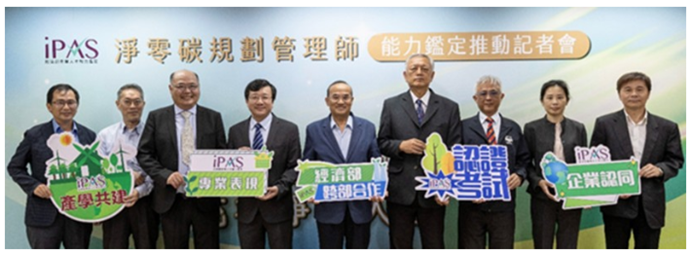
ITRI assisted the Ministry of Economic Affairs in establishing a National Professional Certification for Sustainability Talent, promoting the standardization of net-zero skills through a dual approach of “training” and “certification.” Beginning with the launch of standardized teaching materials—which have accumulated over 200,000 views since publication—the initiative has successfully cultivated more than 750 seed instructors, thereby strengthening the nationwide training foundation. In 2024, the first iPAS Net-Zero Carbon Emission Planning Administrator - Associate Level competency certification was launched, attracting nearly 18,000 applicants, of which more than 80% were incumbent professionals. The certification has already been recognized by over 1,000 enterprises, underscoring that net-zero skills have become a critical priority for industry talent development.
- (2) Cultivating Green Competencies in Corporate Talent
To deepen industry talent capabilities, ITRI has partnered with associations to establish the Net-Zero Sustainability Talent Alliance, identifying industry needs and offering specialized courses through the Net Zero & Sustainability School. Programs include the International Course for Chief Sustainability Officers, where domestic and international experts analyze the implementation of international climate agreements in Taiwan and strategies for applying net-zero technologies. For small and medium-sized enterprises (SMEs), technical solution-oriented courses have been designed. For example, in the machine tool industry, the Green Machine Tool R&D Engineer Training Course integrates intelligent manufacturing scenarios, while the Taiwan Building Energy-Efficiency Rating Practical Course provides the construction sector with access to a “Building Energy Simulation and Analysis” platform, enhancing practical application. The Net-Zero Green Talent Training Course cultivates foundational carbon reduction skills, enabling participants to contribute to ESG management upon completion. In addition, ITRI also collaborates with enterprises to deliver customized training solutions. For instance, a tailored program for Chicony Electronics supported employees in obtaining the iPAS Net-Zero Carbon Emission Planning Administrator - Associate Level, combining theory and practice to comprehensively enhance professional expertise and hands-on capability. ITRI remains steadfast in cultivating green-collar talent and will continue to deepen professional skills training and sustainability development, actively expanding its impact to provide core support for industrial transformation.
Customer Recognition
- Tailored training programs on carbon management, energy efficiency, and energy topics were developed for Sanyang’s suppliers. The courses featured experienced expert instructors who provided in-depth analyses of common practical challenges encountered in corporate carbon reduction efforts, sharing successful strategies and real-world case studies. These sessions offered valuable practical guidance and insights for enterprises, significantly supporting the effective implementation of carbon reduction initiatives.
Trainee Feedback
- The Net-Zero Green Talent Training Course provided a highly enriching learning experience. Even for participants without a related academic background, the course aligned well with their initial career objectives. Following the program, multiple publicly listed companies were invited to recruitment events, and several participants subsequently received job offers.
- Attending the Certified Wound Dressings R&D Engineer Program offered an in-depth understanding of cutting-edge technologies and applications in dressing development. The program broadened participants’ professional perspective and increased their confidence in practical dressing development. In particular, the integration of low-carbon and sustainability concepts demonstrated that future product design must balance both environmental considerations and performance.